Introduction
Birds in Art: Devotion and Decadence surveys the visual arts to consider the ways birds have been exploited and revered as objects and symbols. Birds have been a source of inspiration throughout human history. From the shimmering delicacy of a hummingbird’s wings to the transcendent grace of an eagle in flight, birds evoke both the wonder of nature and our fascination with the heavenly. Birds are a source of nourishment; they influence fashion and luxury as standards of beauty, and they have captivated the imaginations of natural scientists and embodied salvation as representations of the divine.
This exhibition invites viewers to consider birds as spiritual messengers and objects of human consumption through representations of reverence, luxury, game, and scientific study.
Birds in Art: Devotion and Decadence is curated and designed by students in the University of Toledo’s Art Museum Practices and Graphic and Interactive Design concentrations.

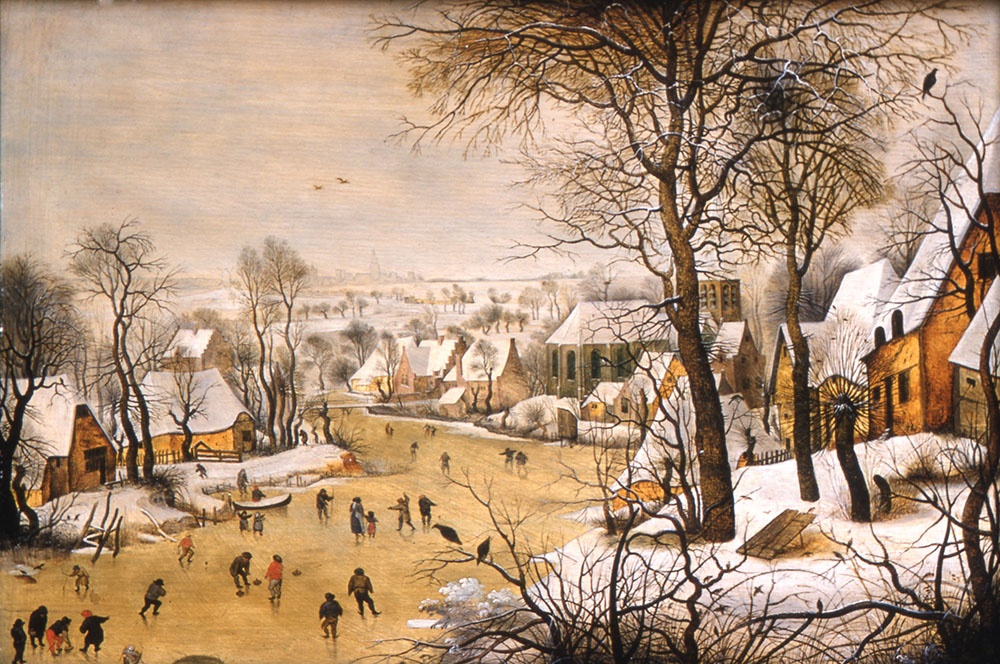
Winter Landscape with a Bird Trap
The bird trap at right in the foreground of this scene acts as a literal and metaphorical warning: Just as birds, symbols of the eternal soul, can be ensnared by the traps humans leave for them, so, too, can humans be foiled by temptation. During winter, even apparently harmless diversions can distract us from the work to be done, with grave consequences later. To survive the seasons, provisions must be laid, and carelessness can lead to ruin. The bird trap represents the fragility of life set against the lurking dangers of incautious indulgence. How long will the children play, and how long will the birds avoid their doom?
Pieter Brueghel the Younger
Flemish, 1564/65–1637/38
Winter Landscape with a Bird Trap
Oil on wood panel, about 1600–25
15 1/4 × 22 1/4 in. (38.7 × 56.5 cm)
Purchased with funds from the Libbey Endowment, Gift of Edward Drummond
Libbey, 1954.77