Decadence
For centuries, the seductive grace and beauty of birds encouraged a desire to possess them. European colonization of Asia and Africa commodified the most spectacular birds as exotic status symbols. Wealthy Europeans took them as pets, and designers harvested their feathers to enhance fashion and luxury goods. People have raised poultry for food and have hunted birds for sport. Pioneering ornithologists, whose motives were not violent, nevertheless killed birds in order to study and document them. By the late nineteenth century, the complacency with which humans regarded and treated birds led directly to the extinction of the passenger pigeon in North America, among other species worldwide. Beginning at the turn of the twentieth century, conservation efforts reversed these trends, encouraging people to appreciate birds in ways that do not require consuming them.
The works in this section document these and other ways that humans have related to and made use of birds.
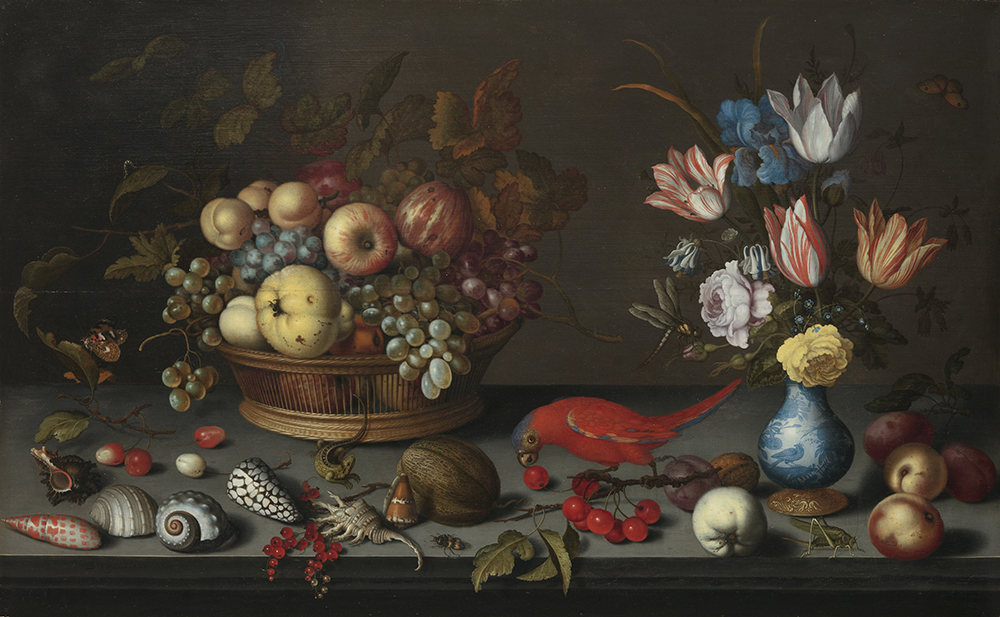
Balthasar van der Ast
Dutch, 1593/94–1657
Fruit, Flowers, and Shells
Oil on wood panel, about 1620–29
21 3/4 × 35 1/8 in. (55.2 × 89.2 cm)
Purchased with funds from the Libbey Endowment, Gift of Edward Drummond Libbey, 1951.381
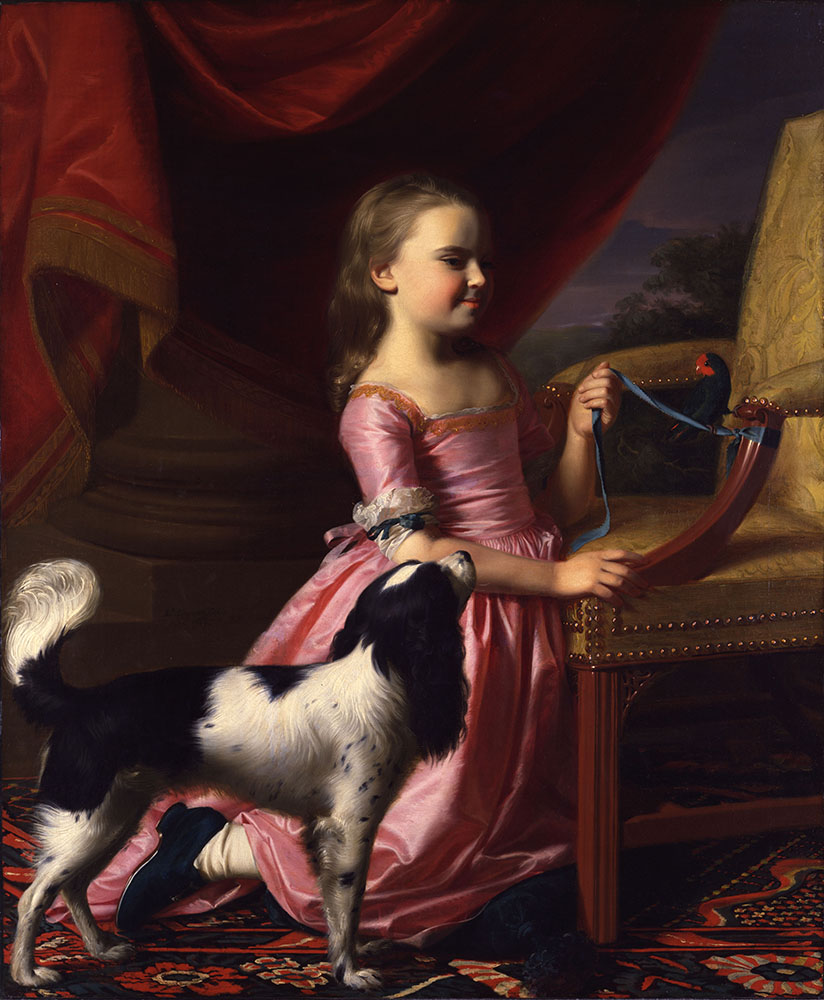
John Singleton Copley
American, 1738–1815
Young Lady with a Bird and a Dog
Oil on canvas, 1767
48 × 39 1/2 in. (121.9 × 100.3 cm)
Purchased with funds from the Florence Scott Libbey Bequest in Memory of her Father, Maurice A. Scott, 1950.306


Young Lady with a Bird and a Dog and Fruit, Flowers and Shells
European colonization and trade in the fifteenth through eighteenth centuries created markets for exotic goods. Before long, the list of typical household pets included birds only recently familiar to Europeans and Americans. It was soon as natural for a young lady to toy with her red-headed lovebird, imported from tropical West Africa, as it was for her to be accompanied by a Cavalier King Charles spaniel from Oxfordshire, England.
Birds were central to this new trade in living commodities due not only to their colorful appeal but to their small size and ease of transport. In Fruit, Flowers, and Shells, it is not the domestication of these commodities but their staggering variety that is on display: a celebration of bounty with a brilliant, red parakeet stealing the show.
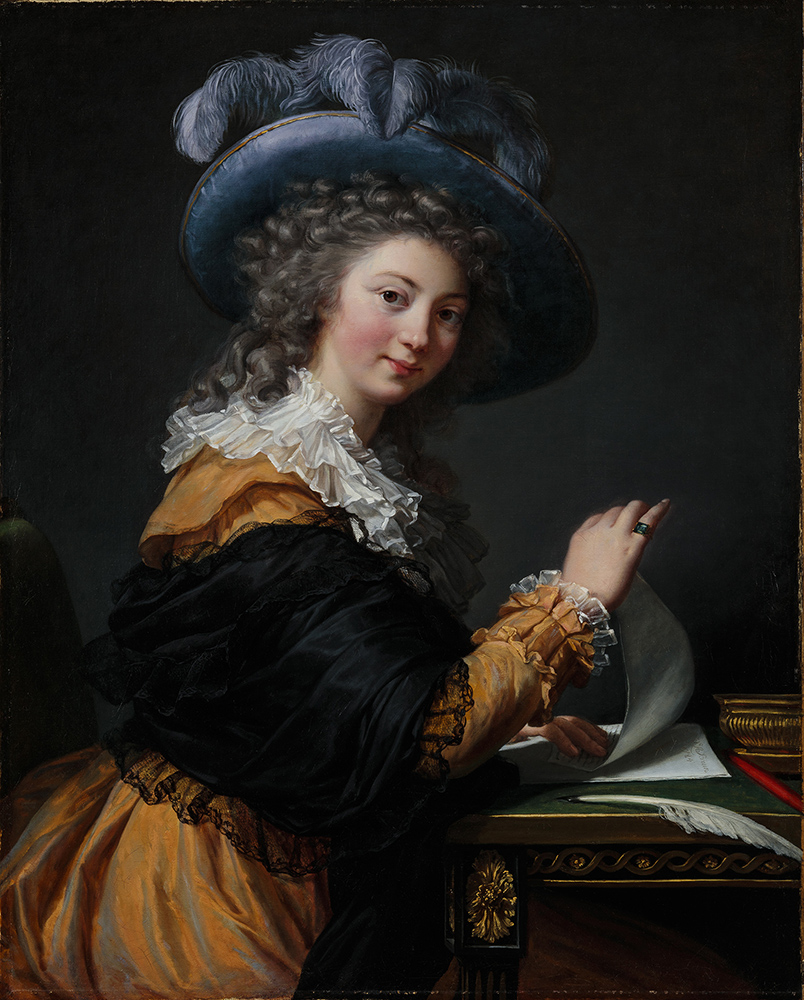
Elisabeth-Louise Vigée-Le Brun
French, 1755–1842
The Comtesse de Cérès
Oil on canvas, 1784
36 × 29 in. (91.4 × 73.7 cm)
Purchased with funds from the Libbey Endowment, Gift of Edward Drummond Libbey, 1963.33
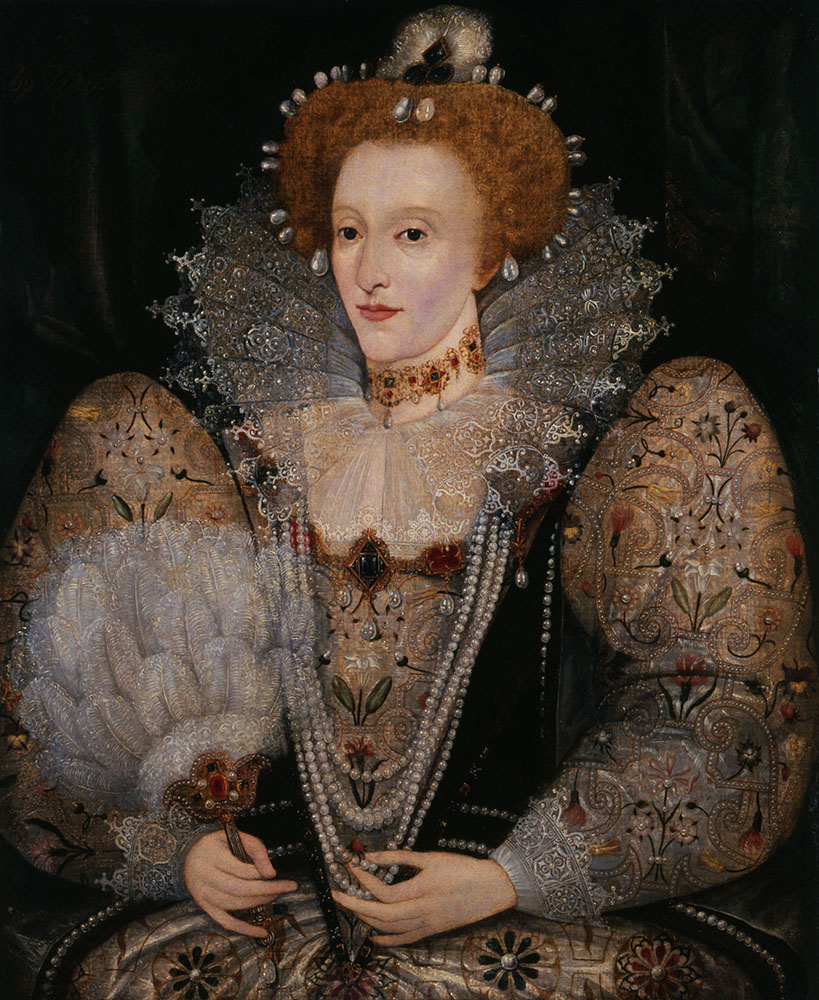
English Artist
Elizabeth I, Queen of England
Oil on canvas, about 1588
30 × 25 in. (76.2 × 63.5 cm)
Purchased with funds from the Libbey Endowment, Gift of Edward Drummond Libbey, 1953.94
The Comtesse de Cérès
and Elizabeth I,Queen of England
While these portraits are from different places and were painted two hundred years apart, they have something in common: ostrich feathers. The comtesse wears a large, flamboyant, ostrich-plumed hat, while Queen Elizabeth I holds an ostrich-feather folding fan. Ostrich feathers steadily gained popularity among the European ruling classes between the fifteenth and eighteenth centuries. Imported mainly from sub-Saharan Africa, ostrich feathers were expensive commodities, and wearing them became a symbol of wealth and courtly status by the sixteenth century.
The demand for feathers in fashion led to increased ostrich hunting and harvesting. Hundreds of thousands, if not millions, of ostriches were killed, nearly resulting in their extinction by the mid-1800s. After global pressure to preserve wild ostrich populations, the industry shifted from hunting to farming.


Melchior d’Hondecoeter
Dutch, 1636–1695
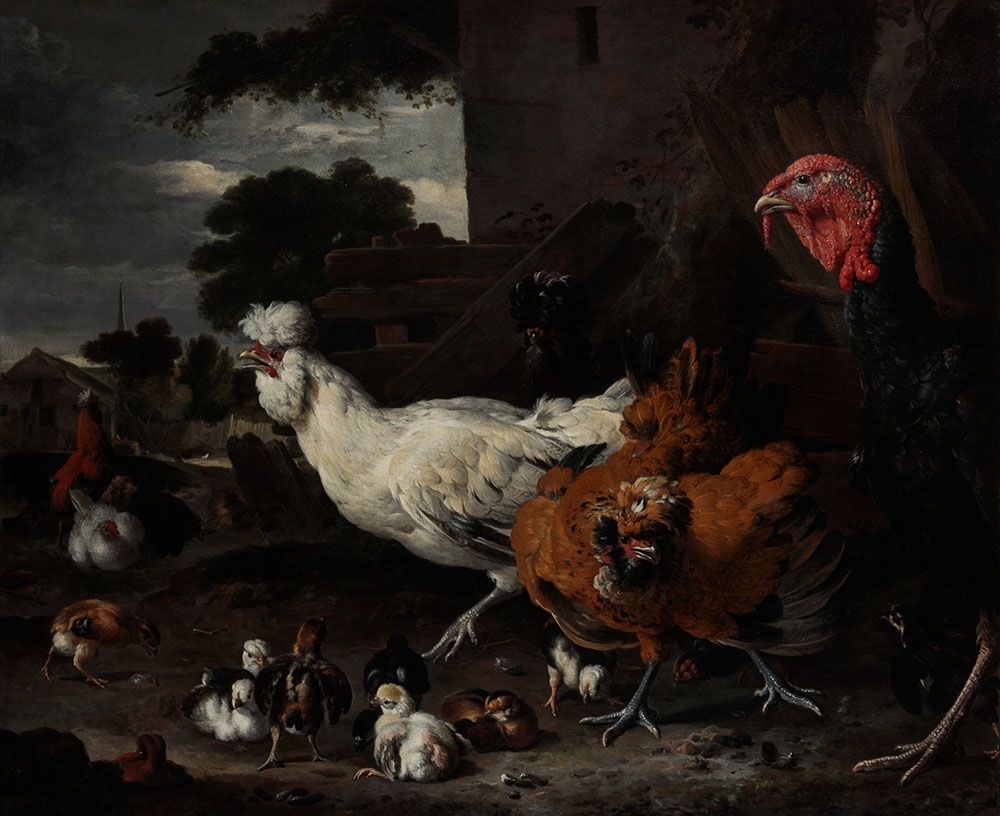
Poultry in a Landscape
Oil on canvas, mid- to late 17th century
36 3/4 × 44 7/8 in. (93.3 × 114 cm)
Purchased with funds from the Libbey Endowment, Gift of Edward Drummond Libbey, 1949.102

Poultry In a Landscape
Poultry in a Landscape is more than a simple farmyard scene; it symbolizes the power and global reach of the Dutch Republic in the seventeenth century. The artist depicts an everyday confrontation between a turkey and a family of crested chickens.
Turkeys are originally from North America, while the crested chicken breed is native to Asia. That such breeds could be found in seventeenth-century Europe was thanks to companies such as the Dutch East and West India Companies, which brought luxury goods and exotic animals from around the world back to the Netherlands. Owning a painting like this might have demonstrated the household’s contact with a global network of trade.
Frank Weston Benson
American, 1862–1951
Old Tom
Etching, 1926
14 3/4 × 9 3/4 in. (37.5 x 24.8 cm)
Gift of Joseph Hearst, 1951.415
Old Tom
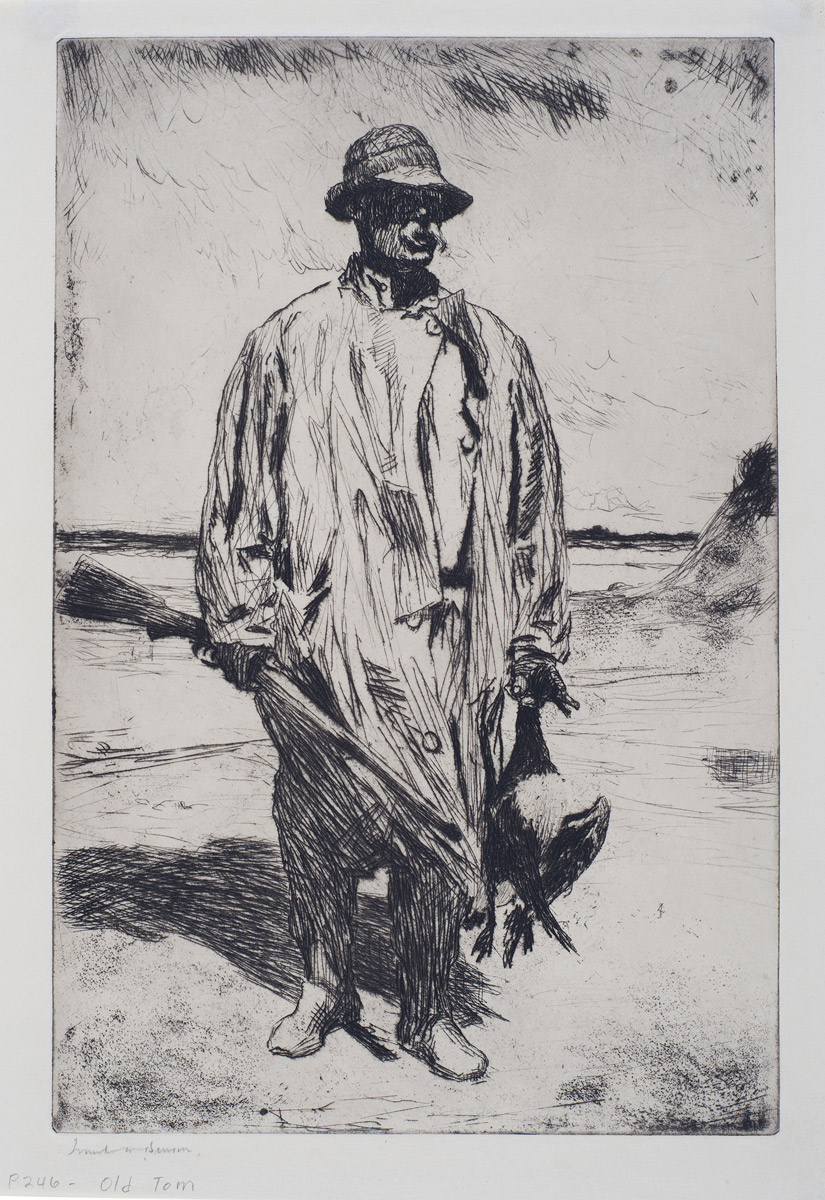
The subject of this etching is Tom Nickerson, a longtime friend and the first hunting guide of artist Frank Weston Benson.
A commanding figure, Old Tom is dressed in sturdy, weatherproof oilskin, holding a dead duck by the neck in one hand and the shotgun used to kill it in the other.
Tom—with his father, Myrick Nickerson, and John Sparrow—was caretaker of a hunting ground, responsible for keeping traps oiled and nets mended, among other tasks. Upon his father’s death, Tom took sole responsibility for the property, where he and Benson were lifelong shooting companions as regular members of a larger group that gathered each season. This etching, made some years after Tom’s passing, fondly recalls Benson’s old friend and mentor.

Unknown Photographer
Untitled (Roger Tory Peterson at His Drawing Table)
Gelatin silver print, 20th century
8 × 10 in. (20.3 × 25.4 cm)
Mrs. George W. Stevens Fund, 2012.122
Unknown Photographer
Untitled (Roger Tory Peterson with Falcon)
Gelatin silver print, 20th century
8 × 10 in. (20.3 × 25.4 cm)
Mrs. George W. Stevens Fund, 2012.124
.jpg)
Untitled (Roger Tory Peterson at His Drawing Table)
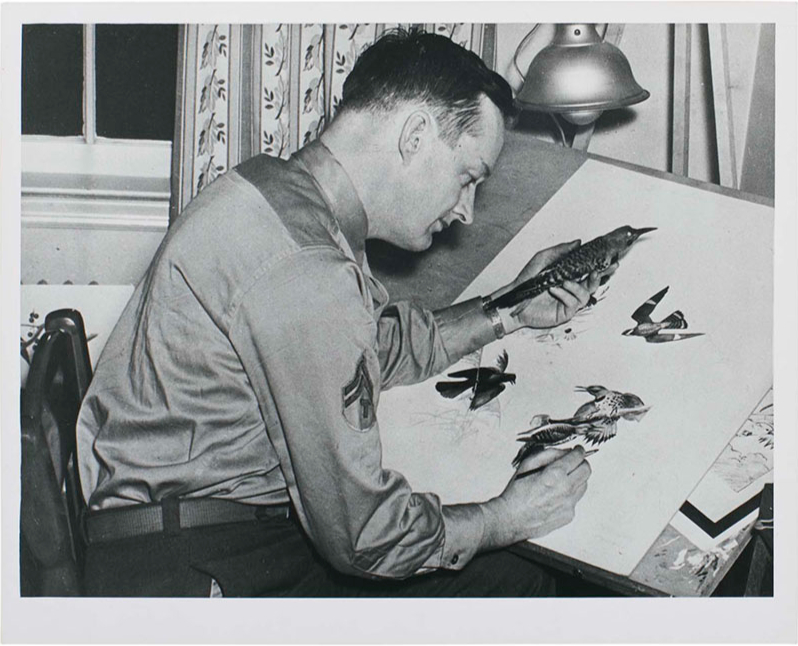
Illustrators in ornithology, such as Robert Tory Peterson, inspired generations of conservation efforts through their field guides. Peterson revolutionized the field guide in 1934 with the creation of the Peterson Identification System, which helped to identify individual birds and grouped similar species for ease of comparison. His contributions to natural history made important contributions to the early environmental movement.
Peterson used both taxidermized (as shown here) and live birds to document the details on which his system was based. His process began with field studies of live subjects to capture their movements, followed by recording their positions on paper cutouts. Later, he would borrow preserved bird specimens from natural history museums to document exact details in plumage and appearance.
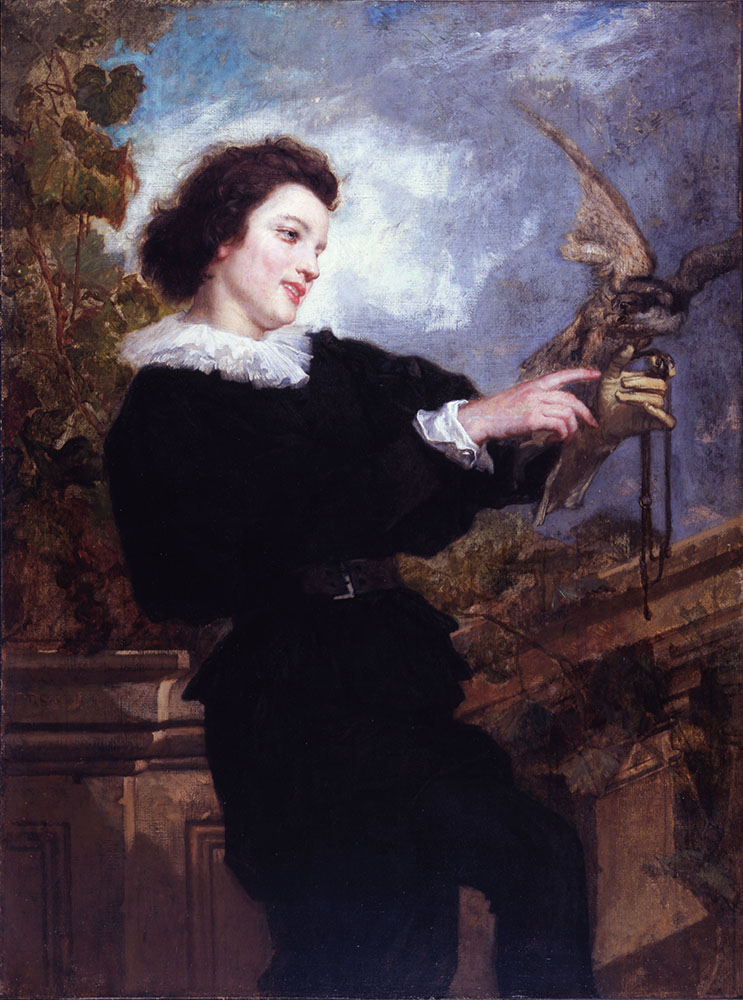
Thomas Couture
French, 1815–1879
The Falconer
Oil on canvas, probably 1846
51 × 38 1/2 in. (129.5 × 97.7 cm)
Purchased with funds from the Libbey Endowment, Gift of Edward Drummond Libbey, 1954.78
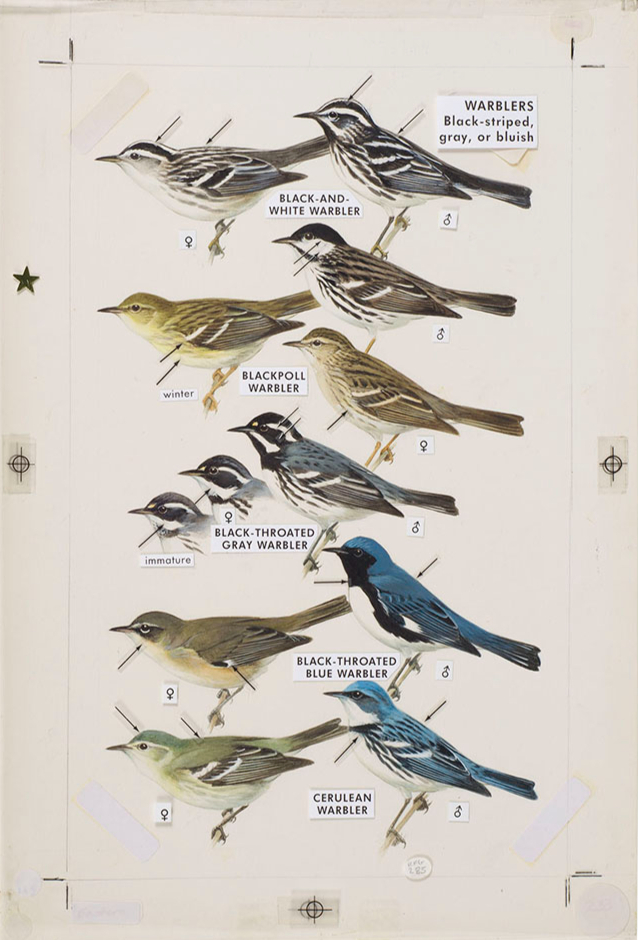
Warblers, from Field Guide to Eastern Birds and The Passenger Pigeon
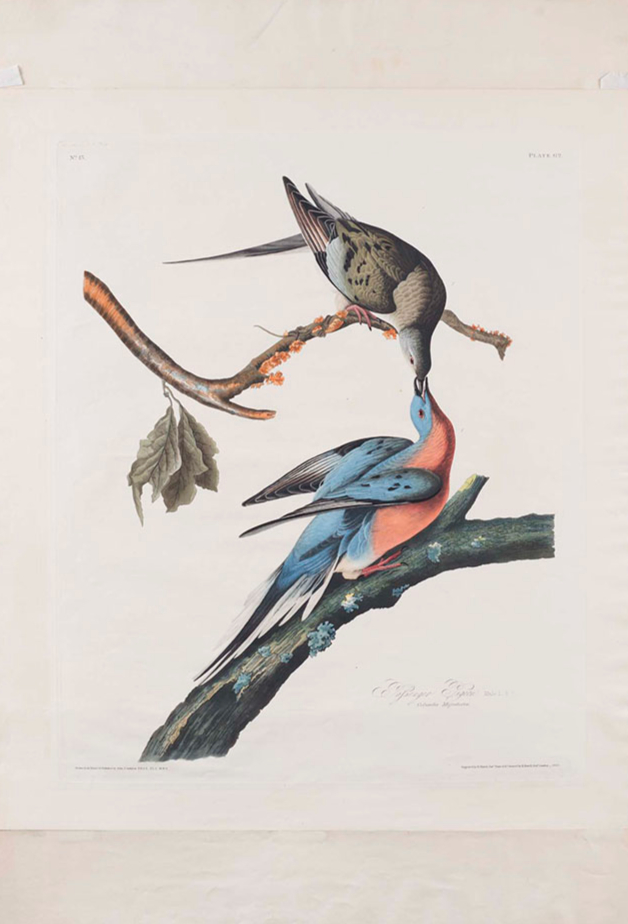
The practice of documenting individual bird species through detailed, lifelike illustrations is of central importance to the conservation and preservation of birds. Before the advancement of magnifying optics, cameras, and other technology, however, this necessitated killing specimens. To observe and record these birds in photographic detail, artists drew from taxidermized birds that could be locked into poses they would not strike in the wild.
Though arresting in its results, the process used to create these lifelike depictions illuminates the fact that human intervention, even when it is motivated by the best intentions (for study or for food), can assert itself on the animal kingdom in problematic ways. The most notable example is the passenger pigeon, once the most numerous bird in North America, which was hunted to extinction.


John James Audubon
American, 1785–1851
The Passenger Pigeon
Hand-colored etching and aquatint, 1829
30 × 26 in. (76.6 × 66.4 cm)
Museum Purchase, 1921.112
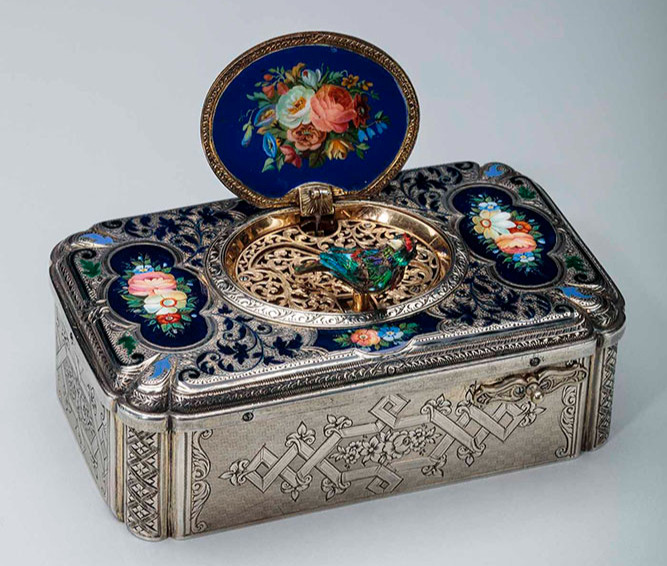
Charles Bruguier the Elder
Swiss, 1788–1862
Music Box
Engraved metal and enamel with hummingbird feathers, about 1845–65
3 3/4 × 2 1/2 × 1 3/8 in. (9.5 ×6.4 × 3.5 cm)
Gift of Florence Scott Libbey, 1933.168
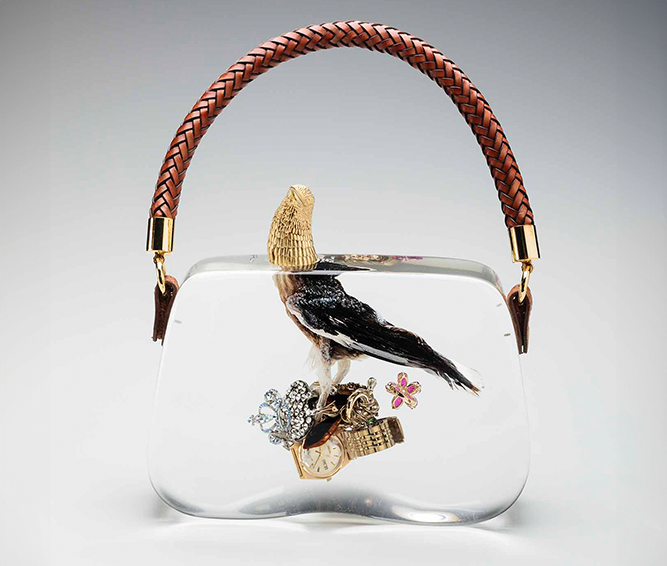
Ted Noten
Dutch, born 1956
Bird Bag
Cast acrylic, gold-plated silver, taxidermy bird, and found objects, 2013
14 3/4 × 10 1/2 × 3 1/2 in. (37.5 × 26.7 × 8.9 cm)
Purchased with funds given by Edith Rathbun, 2014.10


Music Box and
Bird Bag
Birds have long been coveted for the vivid and nuanced coloration of their feathers, which were often integrated into the designs of luxury goods. By the nineteenth century, the fashion industry’s demand for bird parts was such that the feathers of snowy egrets and great egrets were worth twice their weight in gold.
The Victorian fascination for taxidermy birds in accessories and curios, which continued into the twentieth century, put still more pressure on supply. Objects like this music box imitated taxidermy when whole birds were not available. By 1915, this consumption of birds had led to the extinction of several species, such as the passenger pigeon, the great auk, and the Carolina parakeet.
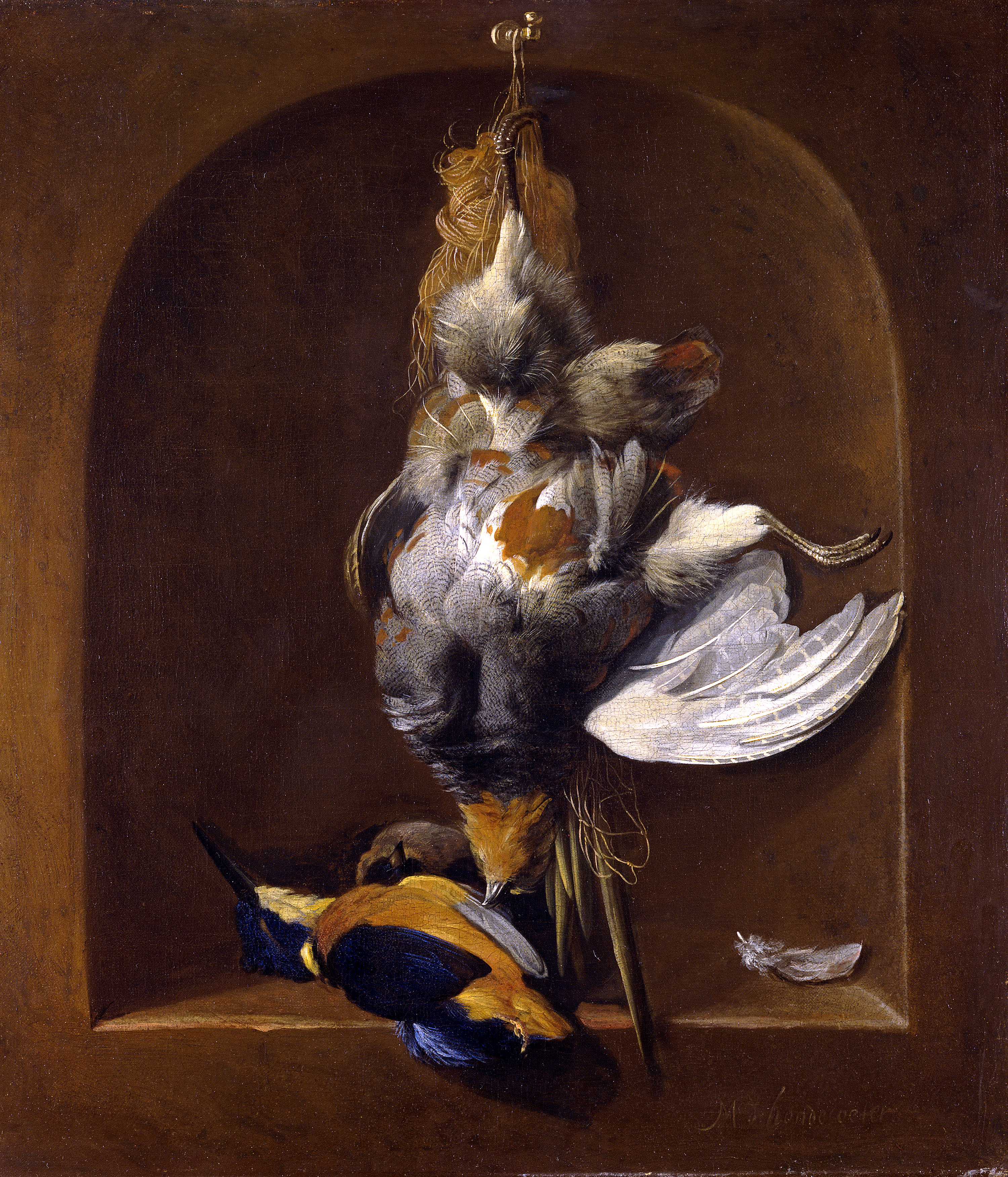
Melchior d’Hondecoeter
Dutch, 1636–1695
Still Life with Birds
Oil on canvas, mid- to late 17th century
21 7/8 × 18 7/8 in. (55.5 × 47.8 cm)
Purchased with funds from the Libbey Endowment, Gift of Edward Drummond Libbey, 1962.69
Still Life With Birds
Melchior d’Hondecoeter’s still life depicts a partridge, a kingfisher, and a finch, recently killed and hanging in a small alcove. Commonly regarded as game birds in the seventeenth century, these species were hunted for sport, recreation, and food. For some viewers, it may be difficult to see birds killed for the sake of amusement. While birds were certainly hunted for sustenance during this time, particularly by common folk, the aristocracy would partake in hunting not only for food but for pleasure, to satisfy the expectations of their station, or with the intention of decorating their homes. Today in the Netherlands, United States, and elsewhere, hunting is restricted to species whose populations can support it.

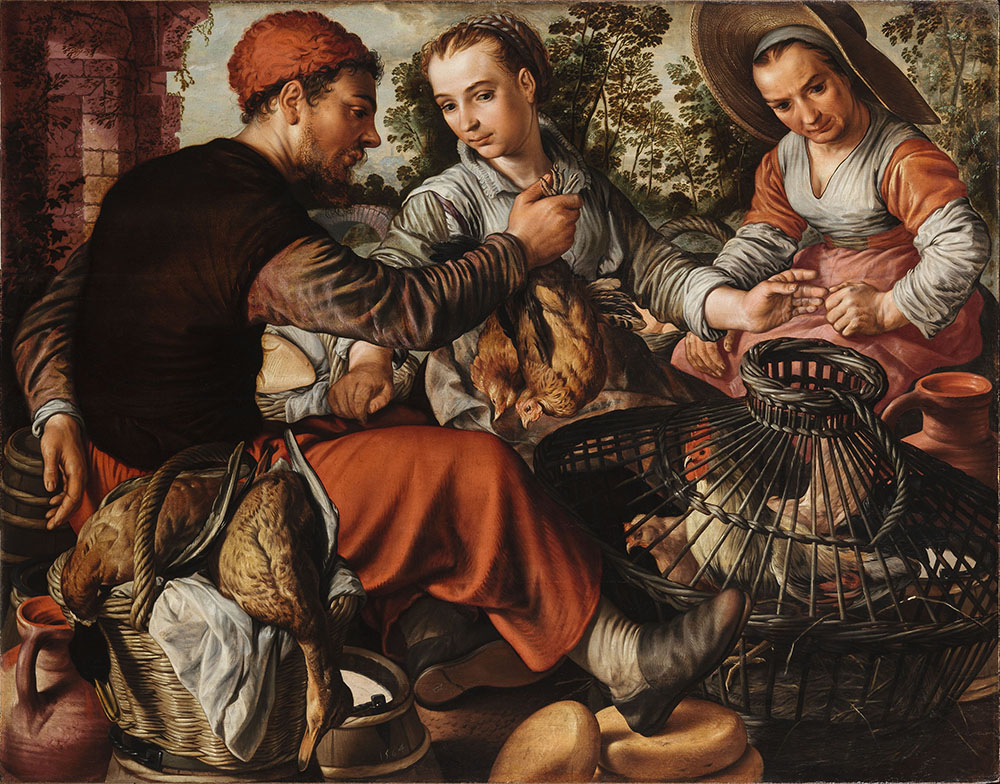
Joachim Beuckelaer
Flemish, about 1533–1574
Poultry Sellers
Oil on panel, 1564
43 1/8 × 55 in. (109.5 × 139.7 cm)
Purchased with funds from the Libbey Endowment, Gift of Edward Drummond Libbey, 1978.57

Poultry Sellers
Joachim Beuckelaer portrays a poultry seller earning his livelihood, displaying both dead and living birds to potential customers. These birds are neither trophies nor sources of entertainment; they are simply food. Compare this painting to Melchior d’Hondecoeter’s Poultry in a Landscape, which features a family of chickens and a turkey in a farmyard. D’Hondecoeter emphasizes the birds as living creatures, while Beuckelaer focuses on their service to humanity.
Poultry species played an important role in sustaining peasant lives, as they were cheap, low-maintenance birds that were able to provide peasants with economic value and additional nutrients. Poultry Sellers thus places birds at the center of an economy in a way that overlooks the sacrifice they make on its behalf.
Thomas Couture
French, 1815–1879
The Falconer
Oil on canvas, probably 1846
51 × 38 1/2 in. (129.5 × 97.7 cm)
Purchased with funds from the Libbey Endowment, Gift of Edward Drummond Libbey, 1954.78
The Falconer
A young aristocrat pauses in his ascent toward a grand terrace to provoke the falcon perched on his gloved hand. Originating in ancient Asia and later spreading throughout Europe, falconry became a highly codified sport that signaled rank, discipline, and specialized knowledge. Here, the bird is both admired and controlled, valued for its beauty, strength, and symbolism of nobility yet trained for human sport and entertainment.
Thomas Couture’s soft color palette and subtle attention to the contrast between the animated figure and the quieter background heighten the scene’s drama. This tension between admiration and dominance represents a pattern in which birds are both revered and possessed by humans.